Camper shopping is tough when you have 101 questions to ask. When I was in the market for my first pop up, my budget was so small I had to be sure to know everything about the camper before I purchased it, as I didn’t have the money to pay someone else for repairs. I was looking for a camper for convenience, and most of my questions were around the electrical system, I really wanted a mini fridge to be able to run off my battery. Here will discuss the most common questions around Camper and RV electrical systems beginners ask. And, I’ll do my best to discuss the aspects in the same plain language I needed when I was in your shoes.
Do Camper Outlets Work On Battery?
Camper & RV electrical outlets can run off your batteries if you have a power inverter installed. If you do not have a power inverter on board your camper or RV, your electrical outlets will not work until you do, or plug into an external power source (shore power).
Camper and RV electrical systems can seem overwhelming at first, but once someone dumbs them down for you, you’ll find they’re far more simple and less intimidating than the electrical system that runs in your house.
How does a camper/RV electrical system work?
The electrical systems in campers & RVs are basic. There are 12 parts, the AC system, and the DC system.

The AC system (120 volt) is anything that plugs into your wall outlets inside the camper. This is likely your TV, microwave, airconditioner, and refrigerator. There are exceptions to some of those. For instance, you can buy a 12 volt (DC) television, or a 12 volt (DC) refrigerator, but if you buy the camper brand new from a dealership, these appliances are most likely appliances that will run on the AC system.
Remember, everything that plugs into a traditional wall outlet in your camper will be tapping into the AC system.
The DC system (12 volt) is what is run off your camper batteries. Assuming your camper batteries are charged, most of the items you need will be set up to run off the DC system.
Items like your:
- Lights (Interior and Exterior)
- Electrical Slide Outs
- Awnings
- Leveling Jacks & Stabilizers
- Water Pumps, and more
Notably, the air conditioner is not a part of the DC system, meaning unless you have your camper plugged into external power, your air conditioner will not run as it does not run off the batteries.

Additionally, while your traditional wall outlets will not work on the DC system, USB outlets will! So if you have USB outlets installed in the camper, those will run off the battery whether your camper is plugged into anything else or not!
What does a converter do in a camper?
A converter in your camper or RV converts the AC power it receives into DC power. This occurs when you have your camper or RV plugged into Shore Power (an external power source). When you are plugged into Shore Power, your camper is receiving power via an AC system. Your camper converter converts the power from AC to DC so it can recharge your DC system (your batteries)! What also occurs when you’re plugged into Shore Power, is your AC system in your camper (the traditional wall outlets) is fed electricity. This means, assuming you have enough power coming in, all your wall outlets will be up and running. If you don’t have enough Shore Power coming in, you may find that some heavy energy usage appliances won’t run or won’t run at the same time as others. Oftentimes you see this in microwaves or very large air conditioning units, or trying to run both at the same time!
How do I get my wall outlets to work in my camper?
There are two main ways to get your camper or RV wall outlets to work. The most common way is to plug your camper into an external power source, such as shore power or a generator. The second way is to install a power inverter into your camper.
What does an inverter do in a camper?
A power inverter in your camper or RV inverts the DC power (its batteries) into AC power (power used in traditional wall outlets). Simply put, this means that with an inverter, you gain the ability to run AC (traditional wall outlet) appliances when not plugged into shore power! An inverter can be installed a lot of different ways. To get every wall outlet to run in your camper with an inverter, you will want to install the inverter with the rest of your electrical system, near the converter that came with your camper. If you don’t need to run every wall outlet when running off just your DC system, you can buy a much smaller portable inverter, or two, that plugs directly into a DC outlet. This is a great option if you only need a few AC outlets at a time and want to save hundreds of dollars.
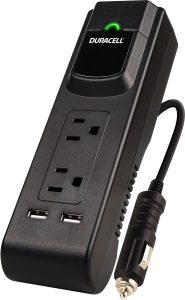
This Duracell model is a great option for an inverter under $50. It has two AC outlets, two USB outlets, and a built in fan to keep itself cool. Additionally, it can power devices up to 175 watts. This is about the power needed to charge two laptops at a time, so it’s a great option if you only need to run a few devices at a time.
Do all campers have inverters?
No, campers traditionally come with power converters, not power inverters. While if you’re purchasing a camper or RV on the used market you may come across some camper with inverters pre-installed, it is unlikely you’ll find inverters at a new camper dealership.
What can’t run on an inverter in my camper?
One device you should not attempt to run on your inverter would be your air conditioning unit. Your air conditioner, no matter how small, will likely over power your inverter and has the potential to damage it. Even if you did have an inverter that could carry enough power to run your air conditioner, it would drain your batteries in likely a matter of minutes.
Can I plug my RV/camper into a house outlet?
Yes, you can plug your camper trailer or RV into a traditional house outlet if you have the correct adapter. While the power will likely not be strong enough to power all your appliances simultaneously in your camper, it will be strong enough to slowly charge the batteries, and well as keep them topped off for extended periods of time.


Conclusion
These are the most basic fundamentals of the electrical systems in camper trailers & RVs. Hopefully with this knowledge, you’ll be able to make a better informed decision with any purchase you may be shopping for, with a little bit more of an understanding of what your needs are.
Happy camping!


Leave a Reply