Solo Camping Safety
So, maybe you’re wanting to camp for the first time and have no one to go with. Maybe you’ve camped with friends and family and now have gotten the itch for a solo camping trip instead!. Either way, you are wondering if there are any real or unique risks before you make a decision. All outdoor enthusiasts have been where you are. Odds are, you will find there’s something about being out camping solo that’s uniquely freeing, and even if you want to go with others later, you will have learned the ropes on your own and be able to lead and teach when needed, and take charge if ever needed. Just like any outdoor activity, there are certain unique risks to be aware of. But again, like any outdoor activity, I think you’ll find the risks to be manageable once broken down and addressed. Here we’ll talk about solo camping tips, planning, gear, and warning signs to be conscious of. But before you know it, you’ll be a solo camping pro and feel the confidence in finding a safe place to crash and enjoy the outdoors.
Is it Safe to Camp Alone?
Yes, camping alone can be safe if you know the right precautions to take. With a few specific pieces of equipment, knowing what and who to stay mindful of, and by taking a few personal safety measures, you’ll find camping alone can be filled with rewarding adventures.

While camping alone is great, it comes with its own set of unique challenges and risks. Here we’ll break down several to calm the nerves and get excited about starting to take your own solo adventures!
Where is it Safe to Camp Alone?
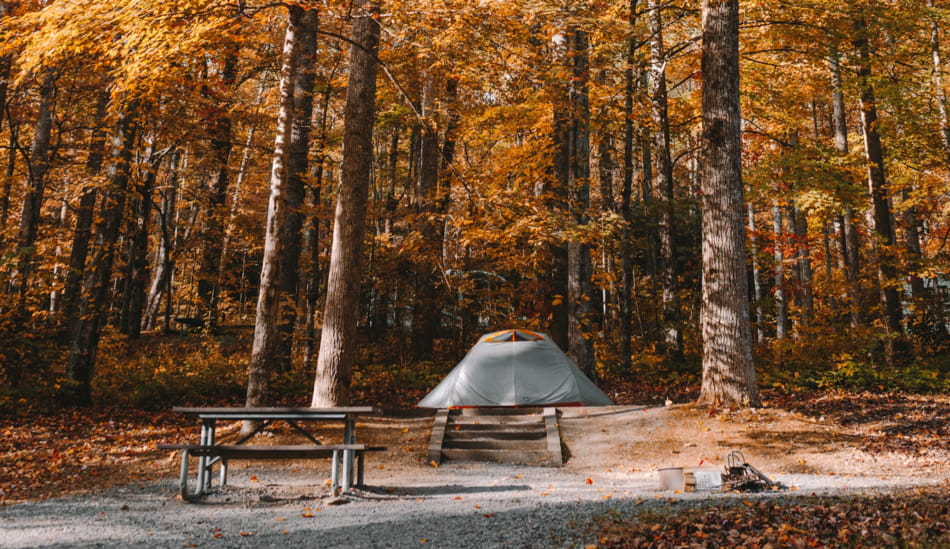
The best places to camp alone are State and National Parks. This is true especially for beginners. These Parks are typically regularly patrolled by Park Rangers, checking on campers safety and well-being. While they may not walk up and start a conversation with you at your campsite, you will see them walk or drive around the campgrounds a few times a day to see if anything is out of the ordinary. You will likely see them at different trailheads throughout the day too. They may be conducting maintenance on the trail, maintenance on nearby facilities, or sometimes providing tours or educational lessons to park visitors.
Another reason why State Parks and National Parks are a safe option to solo camp as a beginner, is their proximity to neighboring towns. While there’s not going to be a large metropolitan complex nearby, there will likely be a small town within 15-30 miles of an established State Park or National Park Campground. This means that there are often some emergency services relatively nearby if an emergency does occur.
A final reason State Parks and National Parks are a good choice for solo camping, is the fact that they often utilize Campground Hosts. Camp Hosts are often found at the entrance of different campgrounds in State and National Parks. They hold a variety of functions depending on the park and its needs, but most camp hosts help campers check into their site, clean and stock restrooms, answer basic park questions, walk the campgrounds, and provide Ranger and park personnel with information related to visitors, maintenance needs, wildlife sightings, etc. Most of the time camp hosts are RVers or utilize camper trailers as they often sign season-long contracts with the Park Service to live and work at that specific campground. While they don’t directly intervene in situations that would require a law enforcement response, their presence is a deterrent to rowdy behavior and unsafe camp practices as they have the means to contact Rangers and Law Enforcement quickly.
https://www.nps.gov/indu/getinvolved/campground-host-vol.htm
https://www.indeed.com/career-advice/careers/what-does-a-park-ranger-do
Where to Camp Alone – Campsite Selection
So, you found a campground, but are not sure what campsite to select when camping alone. There are a few main things to consider when selecting a site.
Wildlife Awareness
Typically, those of us looking to spend a weekend outdoors are looking for solitude. But, depending on your environment, experience level, and equipment, the level of solitude you should look for can vary quite a bit. For instance, when I’m in Bear Country or an area with a potential for large predators, I camp closer to other occupied campsites. Wild animals, predators included, are not fond of human noises like radios, car doors shutting, and general clinks and clanks at a campsite. For that reason, a beginner solo camper can stay a little closer to others (think a campsite or two away) for added security and peace of mind.
Delinquents Awareness
Another aspect to keep in mind when finding a spot to solo camp are the other people around you. Most of the time, in State and National Parks, the campers around you will be, at worst, a little rowdy later at night. This is often the worst it can get, as the presence of Camp Hosts and an occasional Ranger deter individuals looking to cause mischief from State and National Parks in the first place. Nevertheless, always trust your gut. If someone is paying more attention to you than their own surroundings, or more attention to you than to other campers in the campground, trust whatever your gut is telling you.
Thinking back to the few sketchy nights I’ve had solo camping, these are the tell-tale signs I pay attention to now to decide if I’m going to pack up and head somewhere else before it gets dark.
- Excessive Noise
- Loud and rowdy behavior, especially before it’s even dark, can be a red flag.
- If nearby campers are a disturbance with loud music, shouts, or constant partying, it indicates a lack of consideration and can be a warning sign for later trouble.
- Aggressive or Intimidating Behavior:
- This isn’t usually as extreme as verbal threats or physical intimidation, but argumentative interactions with fellow campers, park staff, or their own family or friends has proven to be a pretty big warning sign in my experience.
- Excessive Alcohol or Drug Use:
- A bottle of wine or a six-pack are one thing, but when I hear excessive aluminum cans being cracked open, I typically bail. I’m might not be in danger, but I’m not going to be able to sleep!
- Disregard for Rules and Regulations:
- Campers who blatantly ignore campground rules, such as fire regulations or wildlife protection guidelines typically pose a risk.
- I think of this one as a warning sign to future behaviors.
What Do I Need to Camp Alone?
There are a lot of lists online of gear you need to camp you can find, but these are a few safety and security items I bring that are especially important when camping solo.
In this list, we are going to assume you have access to the other 1,000 camping lists online and focus just on solo camping safety. We are also going to assume you will be in a State or National Park, somewhere with relative closeness to a small town and occasional park staff appearances.
- Cell Phone and Portable Battery Bank
- This is the power bank I use, it charges new phones up 3-4 times and is under $20!
- https://amzn.to/3P4opUB
- Self Defense Device
- I keep a pocket-sized bottle of pepper spray, and sometimes bear spray for Bear Country.
- As someone who’s been pepper sprayed before, I promise you, anyone that tells you pepper spray is ineffective at self defense has never been sprayed themself.
- This is the one I keep on me as it’s an average price of $7/bottle and fits in a pocket with a lock to prevent accidental dousing.
- https://amzn.to/3wC5M3W
- First Aid Kit
- Even a small one from Amazon or Walmart will do 100 times more for you than having nothing.
- The one I have is no longer on Amazon, but this one is pretty close.
- I like it due to the size being small enough to take on hikes, and the variety of items inside the kit.
- https://amzn.to/3Ih99zZ
Solo Camping – In Conclusion
Camping alone or with a party can be a unique and rewarding experience when you don’t feel like you have to worry about your safety. By following the guidance above, you’ll feel confident in knowing what looks like trouble and what seems safe and be able to relax and focus on enjoying the outdoors. Remember, trust your instincts, stay vigilant, and embrace the serenity of nature.
Happy camping!


Leave a Reply